


Can G-Dragon (GD) rock the global music scene as Psy did with “Gangnam Style” last year?
 The leader of five-member boy band Big Bang is undoubtedly a K-pop juggernaut adored by hundreds of thousands of fans in Korea and many other Asian countries. Nonetheless his presence in the two trendsetting markets — the United States and Europe — is still meager and fragile. Yet various signs hint that things are changing. Unlike several years ago when the audience of his concerts in the regions were mostly Korean or those ethnically rooted in Asia, the makeup of these days is literarily globe-spanning. “I like GD because when he performs you can tell he loves what he does,” said Priyashika Giri, 20, a GD fan living in London, in an email interview. “He’s a true leader and an amazing performer. Every time he performs he has this aura that’s just really special.” Watching Big Bang’s London concert live in March last year, Giri said, “He is so versatile and is amazing at what he does. So I can’t help but be in awe when he performs.” Carolina, 25, is another GD fan in Italy. She asked to be printed by her first-name only. “I think he is a good rapper and he definitely has style. Contrary to the great majority of Korean singers, his career does not seem to be based exclusively on appearance,” Carolina said. “I have seen him live at a Big Bang concert, and I was actually impressed by the effort they all put into trying to make a good show, even when they were obviously exhausted.” She said there is a big online community of Italian fans. Jessica Mangrum who saw his performances live in Los Angeles last month said, “G-Dragon is so sexy. He is awesome.” Nyein Aung, 20, living in Singapore, extolled the musician’s fashion, saying GD has a lot of “crazy fashion sense.” “He doesn’t stick to one kind of fashion — he is always evolving. And I think that kind of rubbed off on Big Bang,” Aung said. She expressed regret for having rare opportunity to see GD with the naked eye since he, as well as Big Bang, hardly does a world tour. “But that’s okay,” she said. “I follow GD on Instagram. So I see what he’s doing from day to day.” His rise seems to have been felt by U.S. musicians and producers. Award-winning American hip hop star Missy Elliott joined the production of GD’s second solo album “Coup D’etat.” Another U.S. musician Pharrell Williams recently expressed his desire to collaborate with the Korean “newcomer,” for which GD responded positively saying, “Do it Let’s Do it!!” in his tweeter. Other collaborators of the singer include Diplo, Baauer, Sky Ferreira and Boys Noize. Fashion outshines music GD’s rise seems undeniable by all accounts. But opinions vary when it comes to its propeller. His fans would definitely become upset if someone claims GD’s escalating recognition in the U.S. is more driven by his fashion than music. Regrettably that’s the view of American fashion magazine COMPLEX — although his latest album entered the Billboard 200 at No. 182 last Friday with more than 2,000 copies sold, according to Nielsen SoundScan. “Unlike labelmate Psy, G-Dragon isn’t making a name in the U.S. off of a gimmicky song, or, for that matter, any music at all. Instead, it is the uniqueness of G-Dragon’s personal style that has piqued the curiosity of American tastemakers,” the magazine claimed in its cover story headlined, “G-Dragon: Frequent Flyer.” GD seems to admit it to some extent. “It would be better to be recognized first for music, but people go with what they like,” the musician was quoted as saying in an interview with the magazine. “If I’m here because I’m recognized more so as a style icon, then if I’m smart enough, I will use this opportunity to share more insight about my music.” In a media briefing in Seoul on Sept. 4, GD said he tries to make himself and his album “a bit eccentric.” “I think people like me because of this,” he said. “It works because I’m still young. Perhaps I will drop it as I get older... Anyway at the moment that’s my style.” Who is G-Dragon? G-Dragon, also known as Kwon Ji-yong, was born in 1988. At the age of eight, he joined Korea’s biggest music label SM Entertainment as an unsigned trainee. He moved to the second largest label YG Entertainment to make his official debut in 2006 as the leader of boy band Big Bang. He has been involved with writing, composing, and producing many of the band’s hit tracks, including “Lies,” “Last Farewell,” and “Haru Haru.” He released his debut solo album “Heartbreaker” in 2009. It went on to become one of the most successful albums of the year, garnering sales of over 200,000 copies and winning the M.net Asian Music Awards for Album of the Year. He released his second full album “Coup D’Etat” early this year. |
Monday, 16 September 2013


Korean TV could go further with global joint productions and collaborations
In the past few years, K-pop has tapped the hitherto impenetrable European and American markets with acts like Super Junior and Psy, whose single “Gangnam Style” became a chart-topping, universally hot phenomenon.
“My 3-year-old nephew can do the dance,” said Muffy Potter, who is company director and producer of Put It Out There Pictures, noting that “Gangnam Style” had definitely reached Australia.
American Public Television CEO Cynthia Fenneman, noted a similar development in the U.S. “It was quite the rage amongst non-Asians to admire K-pop. It was quite a cool thing,” said Fenneman who heads a major U.S. programming distributor.
However, the same could not be said about K-dramas, which both Potter and Fenneman agree are still primarily viewed by a limited, specific audience in America and Australia.
“I think the trick is because Korean dramas are of a different length,” Fenneman a onetime executive producer for PBS’ “Ciao Italia,” said.
According to Fenneman, U.S. television shows run for 42 to 50 minutes while Korean dramas average an hour to 70 minutes.
“That would mean editing content,” said Fenneman.
“The other thing is language,” said Potter, an Australian producer who co-helms a production company.
Potter noted that while language would not be an issue in countries where dubbed content is prevalent, selling content to countries that do not share a common language “is probably the biggest obstacle” to the further spread of K-dramas.
Both industry experts are acquainted with K-drama content and were in Korea for the 8th Seoul International Drama Awards last week.
Fenneman, who was a juror for last year’s Seoul International Drama Awards, acted as a consultant for the event while Potter served as a juror this year.
“This is one of the few arenas to really put drama up on a pedestal,” Fenneman said of the Seoul International Drama Awards. “Of course, that it is international is so important.”
According to Fenneman, the event is “really putting Korean dramas on the map.”
This year, five out of a total of 25 nominated works were Korean and SBS’ thriller “Chaser” walked away with secondary honors for Best Series at the awards ceremony.
“That was such a moving show,” said Potter. “It really was; absolutely fantastic performances in it.”
Yet despite the quality of K-dramas, the K-drama as a genre has yet to gain notable momentum outside the Asian market.
Remakes, which eliminate the language barrier issue, would seem like the most logical way to expand the overseas market for K-drama. However, according to Potter, the battle to get formats sold and distributed outside of one’s country is cutthroat.
“It is an incredibly competitive marketplace right now,” said Potter.
That does not mean there is little hope for K-dramas in the broader television market. The market is ripe for dramas, says Potter, with co-production a way to expand K-dramas’ reach abroad.
“I think there is a resurgence in television dramas,” said Potter. “I think television drama is the new cinema.”
Potter also noted that “audiences across the globe are more hungry for content. It is encouraging more co-productions.”
Potter went on to reference one of this year’s standout global collaborations, “Top of the Lake.”
The miniseries was co-directed by prominent filmmaker Jane Campion and co-produced by UKTV in Australia and New Zealand, U.K.-based BBC Two and the U.S.-based Sundance Channel.
For Potter, the success of a collaborative effort like “Top of the Lake” hinged on its “great storytelling.”
Potter, who is taking part in a Broadcast Worldwide 2013 drama workshop for global marketing strategies in Korea this week, said those looking to take K-dramas farther afield might begin with, “What kind of stories can we tell that may be set in Korea that could reverberate across the world?”
“That’s how you start selling ideas and formats,” Potter said.
Large-scale global collaborations seem to already be happening in the Korean film industry, most notably with the much-talked-about Bong Joon-ho-helmed flick, “Snowpiercer.”
Primarily a Korean production, The Weinstein Company is acting as the film’s distributor for America and several other countries while the cast includes high profile British and American actors and actresses.
Given that the film is in English, it will be interesting to see how English-speaking countries receive the film when released there.
Should “Snowpiercer” garner a positive reception abroad, it might bring up several questions for the Korean entertainment industry, including the drama market, which seems to have yet to see notable success in overseas collaborations.
“My 3-year-old nephew can do the dance,” said Muffy Potter, who is company director and producer of Put It Out There Pictures, noting that “Gangnam Style” had definitely reached Australia.
 |
| Put It Out There Pictures company director Muffy Potter (left) and American Public Television CEO Cynthia Fenneman discuss K-dramas in Seoul on Thursday. (Lee Sang-sub/The Korea Herald) |
American Public Television CEO Cynthia Fenneman, noted a similar development in the U.S. “It was quite the rage amongst non-Asians to admire K-pop. It was quite a cool thing,” said Fenneman who heads a major U.S. programming distributor.
However, the same could not be said about K-dramas, which both Potter and Fenneman agree are still primarily viewed by a limited, specific audience in America and Australia.
“I think the trick is because Korean dramas are of a different length,” Fenneman a onetime executive producer for PBS’ “Ciao Italia,” said.
According to Fenneman, U.S. television shows run for 42 to 50 minutes while Korean dramas average an hour to 70 minutes.
“That would mean editing content,” said Fenneman.
“The other thing is language,” said Potter, an Australian producer who co-helms a production company.
Potter noted that while language would not be an issue in countries where dubbed content is prevalent, selling content to countries that do not share a common language “is probably the biggest obstacle” to the further spread of K-dramas.
Both industry experts are acquainted with K-drama content and were in Korea for the 8th Seoul International Drama Awards last week.
Fenneman, who was a juror for last year’s Seoul International Drama Awards, acted as a consultant for the event while Potter served as a juror this year.
“This is one of the few arenas to really put drama up on a pedestal,” Fenneman said of the Seoul International Drama Awards. “Of course, that it is international is so important.”
According to Fenneman, the event is “really putting Korean dramas on the map.”
 |
| The 8th Seoul International Drama Awards ceremony was held at the National Theater of Korea on Thursday. (Seoul Drama Awards Organizing Committee) |
This year, five out of a total of 25 nominated works were Korean and SBS’ thriller “Chaser” walked away with secondary honors for Best Series at the awards ceremony.
“That was such a moving show,” said Potter. “It really was; absolutely fantastic performances in it.”
Yet despite the quality of K-dramas, the K-drama as a genre has yet to gain notable momentum outside the Asian market.
Remakes, which eliminate the language barrier issue, would seem like the most logical way to expand the overseas market for K-drama. However, according to Potter, the battle to get formats sold and distributed outside of one’s country is cutthroat.
“It is an incredibly competitive marketplace right now,” said Potter.
That does not mean there is little hope for K-dramas in the broader television market. The market is ripe for dramas, says Potter, with co-production a way to expand K-dramas’ reach abroad.
“I think there is a resurgence in television dramas,” said Potter. “I think television drama is the new cinema.”
Potter also noted that “audiences across the globe are more hungry for content. It is encouraging more co-productions.”
Potter went on to reference one of this year’s standout global collaborations, “Top of the Lake.”
The miniseries was co-directed by prominent filmmaker Jane Campion and co-produced by UKTV in Australia and New Zealand, U.K.-based BBC Two and the U.S.-based Sundance Channel.
For Potter, the success of a collaborative effort like “Top of the Lake” hinged on its “great storytelling.”
Potter, who is taking part in a Broadcast Worldwide 2013 drama workshop for global marketing strategies in Korea this week, said those looking to take K-dramas farther afield might begin with, “What kind of stories can we tell that may be set in Korea that could reverberate across the world?”
“That’s how you start selling ideas and formats,” Potter said.
Large-scale global collaborations seem to already be happening in the Korean film industry, most notably with the much-talked-about Bong Joon-ho-helmed flick, “Snowpiercer.”
Primarily a Korean production, The Weinstein Company is acting as the film’s distributor for America and several other countries while the cast includes high profile British and American actors and actresses.
Given that the film is in English, it will be interesting to see how English-speaking countries receive the film when released there.
Should “Snowpiercer” garner a positive reception abroad, it might bring up several questions for the Korean entertainment industry, including the drama market, which seems to have yet to see notable success in overseas collaborations.
Crayon Pop’s upgraded “Bar Bar Bar,” released on Monday, attracted 15 million viewers on YouTube within 24 hours, reflecting the group’s surging popularity.
The new music video, dubbed “Bar Bar Bar 2.0,” came after the group won a coveted recording contract with Sony Music Entertainment Korea in August. The new version is aimed at boosting the group’s international presence on the strength of the agency’s global networks, taking a cue from the unprecedented success of Psy’s addictive “Gangnam Style.”
An official from Sony Music Korea said, “Version 2.0 aims to publicize the dance moves globally, which is why we focused on choreography rather than creating something new this time.”
Crayon Pop’s new rendition borrowed from some of the famous scenes featured in Psy’s hit music video, an apparent attempt to increase the video’s familiarity among foreign music fans.
Crayon Pop shot to sudden stardom thanks largely to the publicity generated by an “SNL Korea” parody of Bar Bar Bar’s “straight-five engine dance.” The fast-paced track has topped the local music charts for six weeks.
FT Island is releasing a new EP on Sept. 23 to commemorate their sixth year in the music industry and to also thank fans for their continued support.
The album, “Thanks To,” stands apart from the group’s previous albums because it marks the first time that the members wrote and composed all of the tracks.
The title track for the album is “Memory,” which was composed by group vocalist Lee Hong-gi. He gained positive reviews in the past composing “Black Chocolate” and “Orange Sky” as a capable singer-songwriter. “Memory” will have a distinctively rock sound, building from a piano melody to heavy guitar riffs in the chorus.
The boy band will also hold a sixth anniversary live concert titled “FTHX” in Seoul Olympic Hall from Sept. 28-29.
FT Island recently concluded their Asia Tour and Arena Tour in August, performing in countries such as Singapore, China and Japan.
 Promotional image for FT Island’s EP “Thanks to.” (FNC Entertainment)
The album, “Thanks To,” stands apart from the group’s previous albums because it marks the first time that the members wrote and composed all of the tracks.
The title track for the album is “Memory,” which was composed by group vocalist Lee Hong-gi. He gained positive reviews in the past composing “Black Chocolate” and “Orange Sky” as a capable singer-songwriter. “Memory” will have a distinctively rock sound, building from a piano melody to heavy guitar riffs in the chorus.
The boy band will also hold a sixth anniversary live concert titled “FTHX” in Seoul Olympic Hall from Sept. 28-29.
FT Island recently concluded their Asia Tour and Arena Tour in August, performing in countries such as Singapore, China and Japan.
Promotional image for FT Island’s EP “Thanks to.” (FNC Entertainment)Asia Song Festival 2013 will join hands with MU:CON 2013 from Oct. 9 to 12 to commemorate the festival’s 10th anniversary.
The Asia Song Festival is an Asian pop music festival held annually in Korea with participating performers from all over Asia. The festival is set up as a space for interaction between fans and musicians, as well as countries.
MU:CON is a global music conference and showcase focusing on looking at the trends of the music market in Asia and around the world.
The festival will use social networking to gather data and analyze ways to promote music cooperation within Asia.
Festivities will begin on Oct. 9 at Seoul Olympics Main Stadium with 15 teams of musicians performing. Ten groups will be Korean performers and five will hail from different regions in Asia.
From Oct. 10 to 12 venues around Hongdae and Gangnam will host programs and events such as Trade Sessions about K-pop, conferences on learning about the foreign music market, and showcase performances featuring artists from Korea and abroad. Performances will include special collaborations between Korean artists and foreign artists in a variety of genres including hip-hop, rock and electronic.
4
 |
| A promotional image for “SMTOWN LIVE WORLD TOUR III in Beijing.” (S.M. Entertainment) |
The Korean artists will be the first to use the exclusive location that has not been opened to any foreign artist since the 2008 Olympics. The stadium, also known as the Bird’s Nest because of its unique design, is capable of holding up to 90,000 people at a time.
“Only top Chinese stars like Jackie Chan, Leehom Wang and Andy Lau have been able to stand on the stage,” a representative at S.M. Entertainment said, adding, “The concert will show the influence K-pop has in China.”
The line-up for the concert includes BoA, TVXQ, Super Junior, SHINee, Girls’ Generation, EXO, and Zhang Li Yin.
SMTOWN will also be heading to Japan on Oct. 26 for the “SMTOWN Live World Tour III in Tokyo Special Edition.”
Sunday, 15 September 2013
fakes or cheap clothes you should definitely visit Dongdaemun Market orNamdaemun Market. Dongdaemun Market is open 24 hours. Many tourists like to visit the market late at night so you can see all the local vendors buying clothes for their shops or to try some of the food from the night vendors. Teenagers and young women visit Ewha Fashion Street for the latest styles and fashions. In this area Ewha Womans University, Yonsei University and Sogang University are located here making it an ideal location for inexpensive shoes and cheap clothing.
Myeongdong (명동) is one of the primary shopping districts in Seoul. The two main drags meet in the center of the block with one beginning from Myeongdong Subway Station (Seoul Subway Line No. 4) and the other from Lotte Department Store at Euljiro. Many brand name shops and department stores line the streets and alleys. Common products for sale include clothes, shoes, and accessories. Unlike Namdaemun or Dongdaemun, many designer brands are sold in Myeongdong. In addition, several major department stores include Lotte Department Store, Shinsegae Department Store, Myeongdong Migliore, Noon Square and M Plaza. The department stores carry many premium labels and other fashionable goods at reasonable prices.
Myeongdong also has family restaurants, fast food, plus Korean, Western and Japanese dining options. Many restaurants in Myeongdong specialize in pork cutlet (donkas) and kalguksu (thick noodles). Other businesses include hair salons, banks and theaters. Myeongdong Catholic Church is also a well-known tourist attraction. It is pillar of the Catholic church in Korea and was built in the Gothic style. Behind the church is a quiet space for relaxation.
| Directions |
| [Subway] Myeongdong Station (Seoul Subway Line 4), Exit 5, 6, 7, or 8. Euljiro Il-ga Station (Seoul Subway Line 2), Exit 5. |


Dongdaemun Market
Ever since its opening in 1905, Dongdaemun Market has been one of the major markets in Korea. Specializing in wholesale clothing, the market has grown large, having more than 20 shopping malls. A full range of fashion items that cover head to toe, are found in Dongdaemun Market at inexpensive prices. Just name it and you shall find it! No wonder the market is always crowded with retailers, foreigners, customers and tourists.
| Section 1 - Retail Shops The main street divides Dongdaemun Market into two sections. Section 1 is on the side where Doosan Tower is found, and Section 2 is on the side of Dongdaemun Stadium (see the map below). Huge shopping malls in Section 1 basically sell wholesale and retail goods, but mostly deal with general customers and tourists at retail prices. Thus, they have convenient facilities like money exchanges and information desks with English speaking staff. Opening hours are also aimed at general customers, opening from 10 am to 5 am the next day. With a pleasant interior, and rhythmical music played all day long, shopping malls in Section 1 draw many young people everyday. Various events organized by these shopping malls (7 or 8 pm) are also delightful. Sometimes you will get to see youth come up on the stage in front of the mall, dancing or singing. Major shopping malls are Doosan Tower, Migliore, Freya Town and Hello apM. | ||
 | ||
| Section 2 - Wholesale Shops Shopping malls in Section 2 sell goods both in wholesale and retail, but mainly sell in bulk. That is why shopping malls here usually open at about 8 pm and close at 8 am or 5 pm the next day for the convenience of wholesalers. The peak time comes late at night through early morning. Since most shops deal with wholesalers, there are no dressing rooms. Refunds and exchanges are not guaranteed, so make sure to check the quality and size carefully. Major shopping malls in Section 2 are Designer's Club, Migliore Valley, Nuzzon, Gwanghee Fashion Mall, Jeil Pyeonghwa, and Heungin Stardom. Among them, Jeil Pyeonghwa and Heungin Stardom attract customers in their thirties and forties with items of simple and elegant design. Teens and youth in their twenties usually visit Designer's Club, Migliore Valley, Nuzzon and Gwanghee Fashion Mall. |

Namdaemun Market
Namdaemun Market, located in the very center of Seoul, is the biggest traditional market in Korea selling children's clothing, men & women's clothing, daily miscellaneous goods, kitchenware and local and imported products. Most shops have their own factories and make the products themselves offering both wholesale and retail prices which enable visitors to purchase various shopping items at extremely inexpensive prices. Foreign visitors to Namdaemun Market show different tastes: the Japanese are more into foods like gim (seaweed), gimchi, and ginseng, while the Chinese show interest in clothing and miscellaneous goods. On the other hand, most tourists from the West simply enjoy the ambience of the traditional market. Hours vary by store, so it's advisable to plan in advance according toa shopping list before you start actual shopping.

noryangjin fish market
in the very center of Seoul lies Noryangjin Fish Market, a market that is open 24 hours a day. The market is still very active from 1 a.m. til dawn, and 5 a.m. here is as bustling as Myeongdong in mid-afternoon.
As the country's largest wholesale fisheries market, Noryangjin Fish Market sees several thousand people everyday; about 4,000 people who work here on a regular basis and about 30,000 customers who filter in and out throughout the day.
Noryangjin Fish Market is the best place in Seoul to get fresh seafood at competitive prices. Various types of marine produce are gathered here from all over the nation and distributed out to markets via the auctions that are held here. The market is both a wholesale outlet, trading in daily catches that arrive from every possible location, and also a retail market, where the public can get the freshest seafood at very low prices. Moreover, there are many restaurants lining the market which serve hoe (raw fish; pronounced "hwae") so you can enjoy fresh hoe while visiting.
For those of you who aren't familiar with "hoe" may recognize it's Japanese counterpart, "sashimi". They are essentially the same, both being thinly sliced raw fish, or other raw seafood. Just like in Japan, hoe is an extremely popular food, so you can enjoy it not only in the fish market, but at one of the many hoetjip (hoe restaurant) in Seoul.
Although raw fish is enjoyed in both Korea and Japan, there are cultural differences between the two. For example, Koreans prefer hwal-eo hoe, fish that has been freshly caught and eaten straight away. However in Japan, they prefer seon-eo hoe, fish that has been freshly caught and killed straight away and kept fresh on ice for several days.
Also, in Korea, fish with a lot of solid, white flesh is popular, whereas in Japan, fish with soft, red flesh and a lot of fat is popular.
Another difference is in the way raw fish is consumed. In Japan, raw fish is usually dipped in soy sauce with wasabi, whereas in Korea raw fish is usually dipped in not only soy sauce with wasabi, but in chogochujang (red chili pepper paste and vinegar), ssamjang (sesame oil, garlic, soybean paste) as well.
And lastly, in Japan, sushi (raw fish and rice) is more popularly eaten than sashimi, whereas in Korea it is the opposite; Koreans eat hoe more than chobap (Korean equivalent of sushi).
Fish by the SeasonNo matter what time of the year you go to Noryangjin Fish Market, there is always an abundant amount of marine produce, but the varieties of produce available may vary by season.
In the winter, flathead mullet (숭어), yellowtail (방어), Spanish mackerel (삼치), chambok (참복), halibut (넙치), octopus (참문어), and snow crabs (대게) are in season.
In the spring, flounder (가자미), Spanish mackerel (삼치), black sea bream (감성돔), snapper (참돔), parrot fish (돌돔), hakkkongchi (학꽁치), chammuneo (참문어), and prawns (보리새우) are in season.
In the summer, eel (붕장어), hwangdom (황돔), bass (농어), parrot fish (돌돔), grouper (능성어), filefish (말쥐치), and abalone (전복) are in season.
In the fall, dotted gizzard shad (전어), mackerel (고등어), skate (홍어), filefish (말쥐치), sil squid (실오징어), and small octopus (낙지) are in season.
When Koreans eat various types of raw fish in one meal, they usually start with the fish with white flesh first (e.g. halibut, parrot fish, seabass) and then finish off with the fish with red flesh (e.g. yellowtail, tuna, mackerel).
At Noryangjin Fish Market, not only can you get fresh fish, you can various types of seafood including scallops, clams, squid, oysters, conch, sea squirt, sea slugs, marine spoon worm, etc. However, out of the seafood available at the market, the most interesting one for foreigners is most likely sannakji, or "live octopus".
How to Order and Enjoy a Meal at Noryangjin Fish MarketThe first thing you do is figure out what sort of fish and seafood you would like to have for your meal. Once you've decided you can peruse the different stalls to see what sort of marine produce they offer, and then buy from them directly.
Prices vary by type of fish or seafood, by season, and by weight. This is where having good haggling skills works in your favor. But of course, if you can't speak Korean, this can get a bit difficult, but many of sellers will work to communicate with you. Try and get an idea of the prices for the fish and seafood you want beforehand, so that you can try and get a good price. On average you can expect to pay about 20,000 - 40,000 won per person. (But then again, if you decide to purchase A LOT of fish, it will cost you more).
Once you have made your purchase, the seller will slice up the fish into hoe right in front of you. The pieces that don't get cut up for hoe aren't thrown away however, as they are used to make maeuntang (spicy fish stew), so don't be surprised when they package up the remnant bits for you too.
Now that you have your hoe ready to go, the next step is to select one of the many restaurants located within the market. Many times the fish stall seller will recommend a restaurant to you if you don't know of one already.
Once at the restaurant, go ahead and give your fish purchases to the waitress and let him/her know how you want it; as is (hoe-style), cooked, in a soup, etc. (however normally people request to eat the fish as is) so that the restaurant can prepare it for you. The great thing about these restaurants is that you can conveniently eat your food at a table. The tables are usually set up with sauces, marinades, perilla leaves, lettuce, and some vegetables that you can eat your fish with. Expect to pay about 3,000 - 5,000 won per person.
How to Get There
Take subway line 1 to Noryangjin Station. Go out exit 1 and walk for about 520 meters. Or you can take subway line 9 to Noryangjin Station, go out exit 1 and walk about 290 meters.


Parks in Seoul. Over the past few years theGovernment of Seoul have been implementing a five year plan for green growth. This means they will be using and promoting Eco products, using less fossil fuels and promoting green environments such as parks for it’s residents and tourists. The Cheonggyecheon river was part of this project and also the World Cup Parks.
There are hundreds of parks in Seoul with around 40 major ones. These are great for relaxing and getting out of the house. Some of the parks are huge and have a whole range of activities. Along the Han River alone there are 12 parks called the Hangang Parks
Here is a list of some parks located in Seoul with detailed information, maps, directions and photos.
Olympic Park
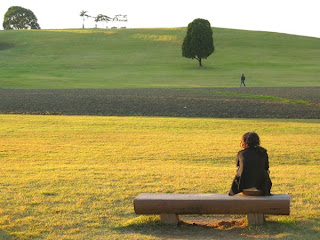
Covering over 1.5 million square meters and the ancient site of the Mongchon Toseong Fortress (with its moat dating back to the early Baekche Kingdom), Olympic Park preserves the spirit of the 1988 Seoul Olympics. The stadiums, arranged in a fan-shaped pattern around the park, were the main stages for the sports events. With extensive grassy fields, sculpture gardens, walking paths, and rest areas, the park is open all day as a multi-purpose area for leisure, sports, and cultural activities.

 Transportation:
Subways:
Jamsil (Jamsil Stadium)-Seoul Line 2 (green) , Seoul Line 8 (pink)
Mongchon Toseong (World Peace gate)- Seoul Line 8 (pink)
Olympic Gongwon (Olympic Park)- Seoul Line 5 (purple) Machon branch
jamsilnaru- Seoul Line 2 (green)
Seoul Forest Park
Olympic Park
Covering over 1.5 million square meters and the ancient site of the Mongchon Toseong Fortress (with its moat dating back to the early Baekche Kingdom), Olympic Park preserves the spirit of the 1988 Seoul Olympics. The stadiums, arranged in a fan-shaped pattern around the park, were the main stages for the sports events. With extensive grassy fields, sculpture gardens, walking paths, and rest areas, the park is open all day as a multi-purpose area for leisure, sports, and cultural activities.


Subways:
Jamsil (Jamsil Stadium)-
Mongchon Toseong (World Peace gate)- Seoul Line 8 (pink)
Olympic Gongwon (Olympic Park)- Seoul Line 5 (purple) Machon branch
jamsilnaru- Seoul Line 2 (green)
Seoul Forest Park
| ntroduction | ||||||
| Opened on June 18, 2005, Seoul Forest had previously undergone a series of changes on Ttukseom (Ttuk Island). In the past the forest had been a royal hunting ground for kings and served as a military inspection facility. But, in more recent decades the area has served a wide variety of functions. Ttukseom initially served as a water-treatment facility, and later as a golf course, horse racing track, and eventually a sports park. Consisting of five parks spread over 350,000 pyeong (approximately 1.16 million ㎡) of land, Seoul Forest is an eco-friendly zone appreciated not only by the people of the city but also those visiting Seoul. Seoul Forest is rapidly developing into the premium city-park of Korea like Hyde Park in London and Central Park in New York. * Cultural Art Park (220,000㎡) Situated in the heart of Seoul Forest, the Cultural Art Park features Seoul Forest Square, Ttukseom Family Field, decorative flower beds, a visitors’ center, a skate park, an outdoor stage, a waterside lounge (restaurant), an in-forest open space, an in-forest play ground and a water play area. * Ecological Forest (165,000㎡) The Ecological Forest, once an area covered by the Han River, has been transformed into an eco-forest connecting the Han and Jungnang-cheon (Jungnang stream). This natural habitat for wildlife animals is home to fallow deer, formosan deer, elks, chipmunks, mandarin ducks, mallards, spot-billed ducks and moorhens, there is also an observatory to help visitors get a better view of the local wildlife. * Nature Experiencing Study Field (85,000㎡) Occupying the structure of the former Ttukseom Water Treatment Facility, this refurbished educational area was established to house an insect botanical garden, a wild flower garden, a themed flower garden, an event ground and a surrounding protective forest. * Wetlands Ecological Field (70,000㎡) Making use of the local reservoir’s natural environment, the Wetlands Ecological Field contains a wetlands ecological management office, an ecological playground, an outdoor nature classroom, a bird observatory, a wetlands flower garden and a botanical garden fed with local, clear waters. * Han River Waterside Park (33,000㎡) Located southwest of Seoul Forest, this riverside area at the junction of the Han River and Jungnang-cheon features a waterfront park, a marina and a rest area.  
|


| Directions |
| From exit #1 of World Cup Stadium station (Seoul Subway Line 6), cross the street and walk 3 - 5 min toward Mapo Agriculture-Fisheries Market. At the right of the building, take the free shuttle (20 min interval). * The bus stop is blocked by the Mapo Agriculture-Fisheries Market building. |
About
The Hangang (River) Cycling Trail stretches almost the entire length of the riverside covering a total distance of 80 km (40 km on each side of the river), and there are plans to expand it further. It is popular both for leisure and also as a commuter route with eco-friendly travel becoming increasingly important to Seoulites. Cycle rental shops operated by Seoul’s eight administrative districts are found along the route so that visitors don’t need to bring their own bicycles. Also, with several parks found along the trail there is always somewhere to take a break.
Beautiful scenery in every season
The ever-changing seasonal scenery is one of the Hangang Cycling Trail’s greatest attractions. Little can rival watching the sunset as you cycle along, and after dark the Seoul nightscape is punctuated by stunningly lit bridges, bright car headlights and twinkling street lamps, all of them lending a special romance to the trail.
The ever-changing seasonal scenery is one of the Hangang Cycling Trail’s greatest attractions. Little can rival watching the sunset as you cycle along, and after dark the Seoul nightscape is punctuated by stunningly lit bridges, bright car headlights and twinkling street lamps, all of them lending a special romance to the trail.


A break in the parkEvery park offers refreshments and restrooms for visitors, so there is no need to worry about getting thirsty or needing to recuperate.


The Hangang parks along the cycling trail offer a variety of facilities including a water sports center, other sports facilities and shaded rest areas. Every park (except for Seonyudo Park) also offers cycle rental. Opening hours vary with the season but are usually from 9 a.m. until just before sunset. Bicycle repairs are also possible at rental shops but only for Korean-made brands of bicycles due to availability of components.


………………………………. ………………………………. ……………………………….
The Hangang parks are open 24 hours. bicycle rentals are usually 3,000 won per hour. 02-1330 ……………………………… ……………………………… ……………………………… Several locations along both sides of the river.
The Hangang parks can be accessed via several Seoul Metro stations. They include:
– Reach Ttukseom via Ttukseom Resort Station on Line 7, exits 2-3.
– Reach Yeouido via Yeouinaru Station on Lines 5 + 9, exits 3-4.
– Reach Yanghwa and Seonyudo Is. via Seonyudo Station on Line 9, exit 1. -
Subscribe to:
Posts (Atom)


 Posts


